Systems That Work: Practical Solutions for Empowering Students Outside Traditional Classrooms

As many of you now, I have a new role! Director of Intervention and Innovative Programs. After 28 years in education—and serving as a classroom teacher, school administrator, and district-level administrator—I’ve seen firsthand how much structure, accountability, discipline, and positive relationships matter to students and their families.

I’ve had the privilege of building our district’s virtual program from the ground up, and now, I’m excited to renovate our alternative school program. Our alternative school students are often the most vulnerable, and I truly believe the work we do here can make a real difference in their lives.

Alternative education isn’t just a buzzword—it’s a real solution for learners who don’t fit neatly into the traditional school box. At Flex360, we’re all about creating flexible, supportive systems that give every student a real shot at success—especially those blazing their own trail outside typical school hours.

Here’s what we’ve seen actually work (and why we’re excited about it).

Personalized Learning and Flexible Curricula

The heart of successful alternative and virtual programs? Personalization. In a traditional setup, students have to squeeze into one-size-fits-all curricula. In alternative schools, it’s flipped—the learning flexes to fit the student, not the other way around.

What does that mean in real life? Think:

  • Pacing that actually matches the student: Whether you need to take it slow on algebra or blast through English at double speed, you’re never “behind”—you’re just on your personal timeline.
  • Learning powered by what you love: Programs can weave in music, gaming, hands-on building, fashion, or entrepreneurship—so learning feels way more worth your time.
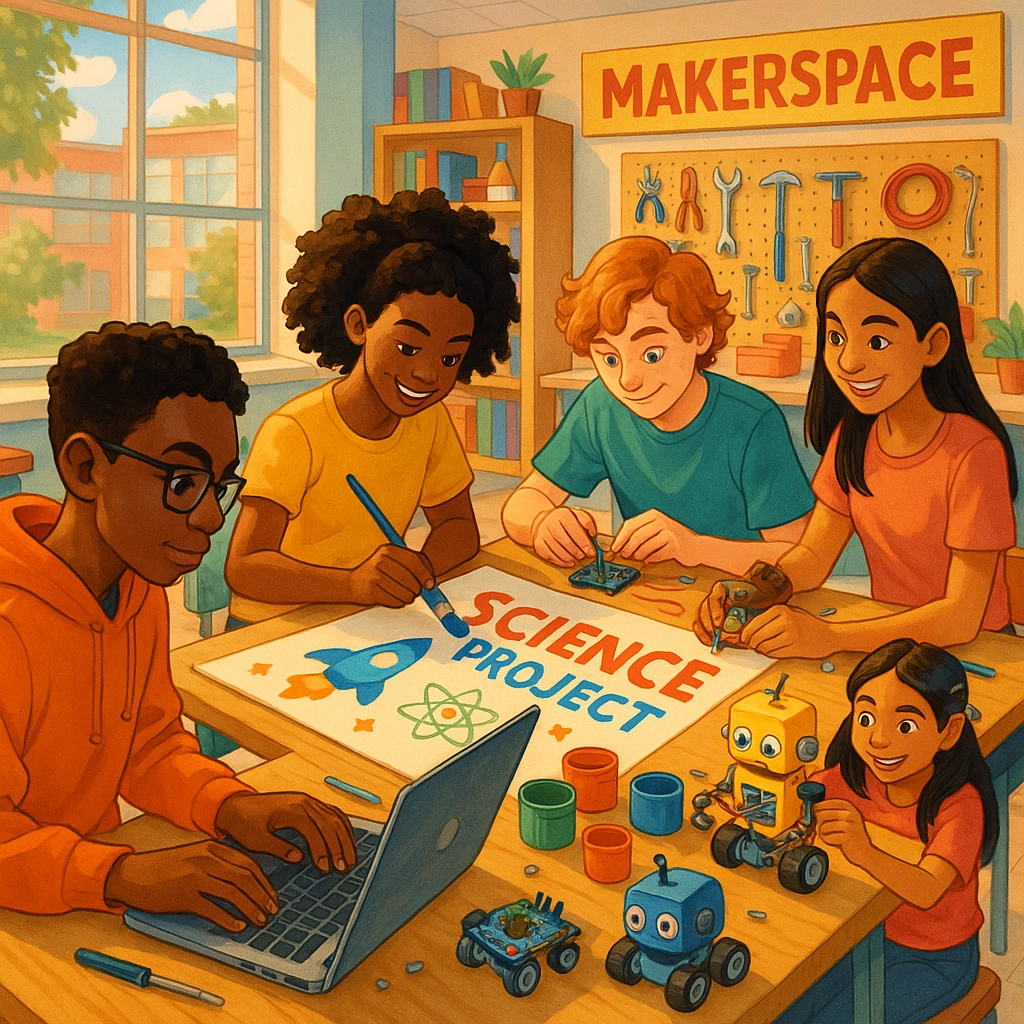
  • Projects over worksheets: Instead of memorizing facts for a test, you’ll work on cool, cross-subject projects that mirror the types of challenges adults tackle in the real world.

When students can actually see how their learning connects to real careers and life goals, suddenly school feels a lot more doable—and a lot more motivating. image_1
Technology-Enhanced Learning

Technology is the backbone for students who learn outside traditional classroom walls. With 1:1 devices, collaboration apps, and digital tools, students are more empowered than ever.

  • Anywhere, anytime learning: Students get 24/7 access to lessons, teachers, and resources—so learning fits life, not just a school schedule.
  • Real connection, even from a distance: Virtual spaces let classmates work together, share ideas, and feel part of a community—even if they're logging in from miles apart.
  • Goal-based learning: Tech gives teachers superpowers to personalize assignments, offer instant support, and challenge each learner just enough.
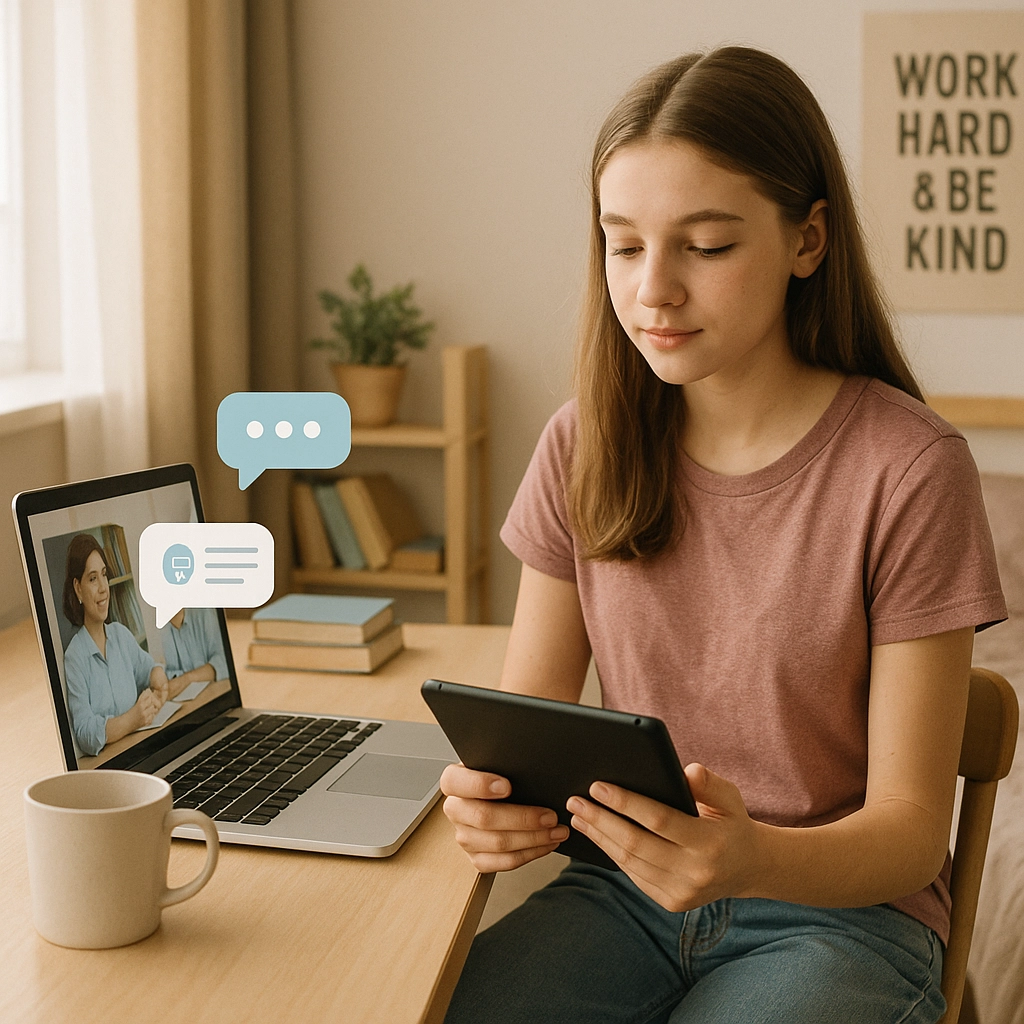
  • Private help channels: No need to stress about speaking up in class—students can DM or chat with their teacher whenever they need help.

Thanks to smart tech, students can learn where they feel comfortable and supported—which is a total game-changer.

Comprehensive Support Systems

Success in alternative and virtual schools goes way beyond test scores. Let’s be real—students show up with their whole lives, not just their homework. The best programs know this and make sure students get the full support they deserve.

Here’s what strong support looks like:

  • Access to counselors who get it: Students can talk through challenges—academic or personal—without judgment.
  • Flexible schedules that fit real life: Whether students are working, parenting, or just need to learn on a different clock, there’s a path that fits.
  • Advisors and mentors: Friendly adults check in, help set goals, and nudge students back on track when life throws curveballs.
  • Wraparound help: Think childcare, a bus pass, or even therapy referrals—so learning isn’t pushed aside by basic needs.

When schools meet students where they are, you see more confidence and a bigger sense of possibility. image_2
Real-World Learning Experiences

Alternative and virtual programs shine when it comes to connecting learning to the outside world—making school experience feel relevant.

You might see:

  • Internships and job shadowing: Hands-on time with local businesses or leaders gives a taste of real careers.
  • Volunteer projects that matter: Students learn leadership and teamwork by actually giving back.
  • Life and work skills classes: Want to nail your first job interview? Understand taxes? Create a killer presentation? This is where you learn that stuff.
  • Capstone projects: The finale—students solve a real problem or create something big, then share it with teachers and the community.

This approach helps students turn “school knowledge” into “life skills”—and see just how far they can go.

Recognizing Prior Learning & Experience

One of the coolest things about nontraditional programs? They recognize that students already bring a ton to the table. Adults changing careers, kids with part-time jobs, or anyone who’s learned on the go can get credit for those experiences.

  • Credit where it’s due: Whether you’ve worked, volunteered, or served in the military, your experience can earn you a head start.
  • Custom learning paths: If you’ve already mastered something, there’s no need to repeat it. You’ll just move forward from where you are.
  • Portfolios count: Instead of big, stressful exams, you can prove your learning through real work—presentations, projects, or demonstrations.

It’s about what you can do, not just how long you’ve spent in class.

Small Classes, Big Impact

Alternative schools and virtual cohorts usually keep things small—think way smaller than a typical high school.

  • Teachers actually know your name: There’s room to connect, ask for help, and get noticed for your strengths.
  • Safe, tight-knit communities: Smaller classes help students feel comfortable and supported, making it easier to show up as your real self.
  • Real participation: It’s a lot harder to hide at the back of the class—everyone gets to join discussions and hands-on projects.

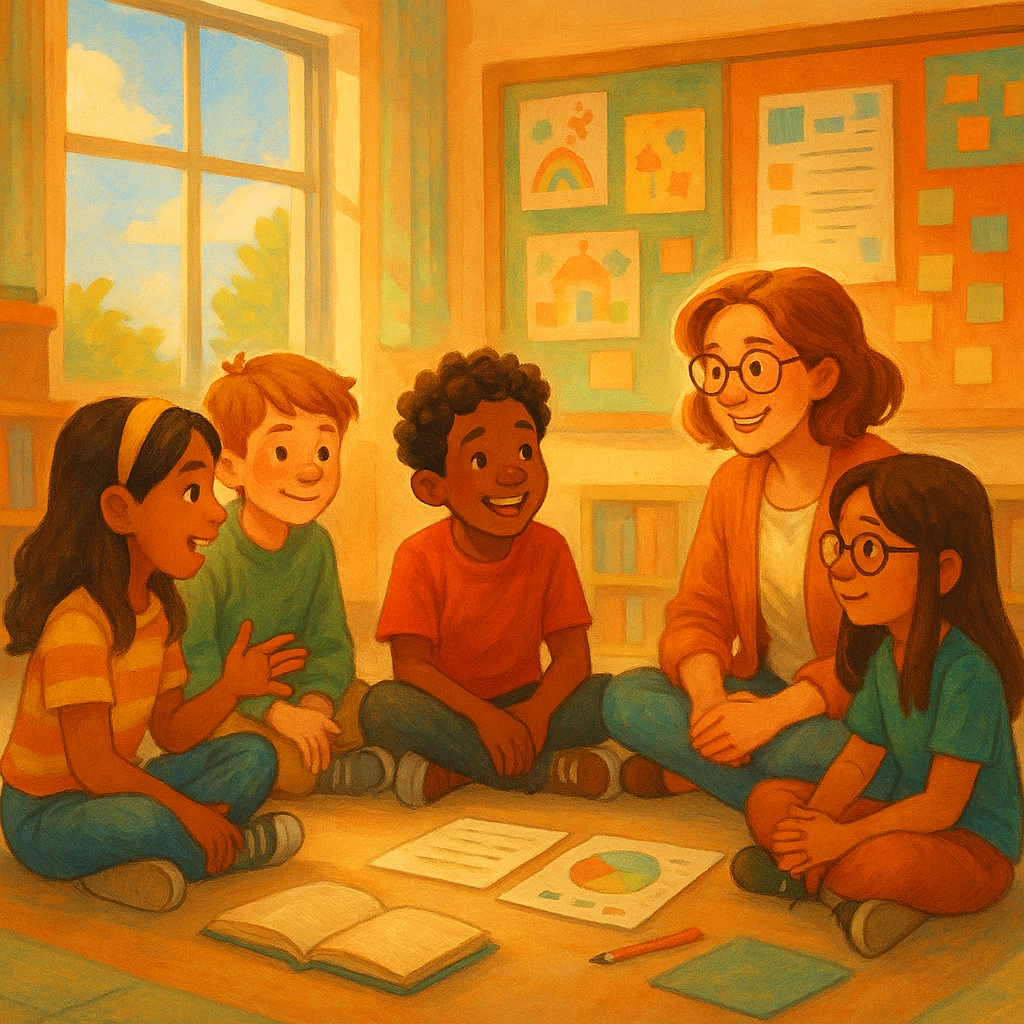
These “mini” school families are great for students who felt lost, ignored, or picked on in bigger settings. image_3
Tracking Success: Data That Matters

Alternative and virtual programs use data that actually matters to students and families. Forget endless standardized tests—these schools track real-life growth.

  • Meaningful attendance: It’s not just about being present. It’s about logging in, finishing work, and genuinely engaging.
  • Real graduation stats: Focus is on students crossing the finish line, not just starting the race.
  • Measurable growth: Every bit of progress gets celebrated, even if students start from different places.
  • Mastery measured through action: Projects and presentations show what students can actually do in the world—not just what they can circle on a scantron.

With this kind of smart tracking, schools help students grow in ways that actually count.

Building Supportive and Inclusive Communities

Belonging might be the most underrated superpower for student success. The best alternative programs make sure everyone feels included, both online and in-person.

  • Advisory circles: Small group check-ins build trust, share wins, and let everyone feel heard.
  • Peer-to-peer guidance: Older students or grads give real talk and show that yes, this path works.
  • Celebration of every story: All abilities, cultures, and perspectives are welcomed and valued.

When students know they belong, they’re way more likely to ask for help, take positive risks, and surprise themselves with what they can accomplish.


Alternative and virtual education isn’t a last resort or a loophole. It’s a real answer for real students—designed to make learning possible, personal, and empowering. At Flex360, we’re all-in on creating systems that lift up every learner, because everyone deserves an education that actually fits.

It’s Not Either/Or. It’s Both/And: Rethinking the Role of Technology in the Classroom

There’s a frustrating—and false—narrative that continues to circulate: that those of us who work in instructional technology believe students should be on devices all day long. That we value tech over teaching. That we’ve somehow forgotten about pencils, paper, and books.

Let me be clear: That couldn’t be further from the truth.

As an instructional leader who is passionate about curriculum and pedagogy, I view technology as a tool—not the goal. It’s a resource we can use to elevate and enhance teaching and learning, not replace it. The best technology integration is grounded in strong instructional practice. It’s about access, engagement, differentiation, and student voice. It’s about using the right tool at the right time—for the right reason.

The truth? The magic happens when we blend traditional and digital tools intentionally.
During my classroom teaching years (2010–2015), I used anchor charts and laptops. Sticky notes and student blogs. Independent reading books and collaborative Google Docs. It wasn’t one or the other. It was both—because students need both. Some ideas grow best on paper. Others thrive in a digital environment.

Earlier this week, I came across a video that was disheartening. In it, educators expressed strong resistance to small group instruction, differentiated learning, and the use of technology. I understand that change can be uncomfortable. But it’s critical that we don’t dismiss the research-backed strategies that are helping teachers meet the diverse needs of their learners.

📽️ Watch the video here

We can honor the value of a sharpened pencil and a well-worn Chromebook. A traditional classroom library and a curated digital one. These tools aren’t in competition. They’re companions in powerful, student-centered instruction.

So no—we don’t want students on screens all day. We want them thinking, questioning, creating, and growing.

Sometimes that means a notebook.
Sometimes that means a tablet.
Often, it means both.

I’d love to hear how you strike the balance in your own classrooms and schools. Let’s continue the conversation. 💬👇

#InstructionalTechnology #EdTech #BlendedLearning #CurriculumAndInstruction #EducationLeadership #StudentEngagement #IntentionalTeaching #EdLeadership #DigitalLearning #InstructionalDesign #BalanceNotBinary

The #ISTELive Checklist

Can you believe it??!! After 2 years, ISTE is back in person!  I cannot tell you how excited I am!  ISTE is my time to recharge my passion and reconnect with my EdTech fam.  This ISTE is especially exciting because it will be my first live ISTE event as a member of the Board of Directors!

My district always brings a team to the conference and in my previous role, I would share some tips & tricks with the group.  Today it brings me great joy to share these tips with you!

Straight To The Source

ISTE already has great information about how to prepare for this momentous event.  Check out their guide to ISTELive 22 https://www.iste.org/explore/professional-development/your-guide-istelive-22 

Recommended Supplies

ISTE days are extraordinarily long, so I recommend that you nab the following “tools”:

  • Portable Battery Charger – Amazon Link
  • Compact Surge Protector – Amazon Link
  • Comfortable shoes – Attendees get in as many as 20,000 steps throughout the day.
  • Book bag for devices and things given out in the exhibit hall. If you’re not presenting, just having your iPad will be fine.
  • As we all know, the food around and in the convention center will be expensive.  A suggestion is to pack snacks to have with you.

New Orleans Restaurant Recommendations:  

    • Brunch Places Recommended to me are Mother’s and any of the Ruby Slipper Cafes. Cafe du Monde for the Beignets. 
    • Here’s a document that has a full list of places! Thanks @Nikole Blanchard!
  • Labels for the Expo Hall that include:  
    • Name
    • Job Title
    • School
    • Work Address
    • Phone Number
    • Email

What Sessions Should I Attend?

Don’t know where to start? Click here for sample schedules that might help you navigate the conference. 

Use the conference website or the app to narrow down your choices….choose all that interest you and then you can narrow it down even further. 

ISTE Conference Website:  https://conference.iste.org/2022/program/search/ 

Need a way to map it all out?  Here’s a Google Sheet Planning document if you’re interested.  

Pre-Registration Required Events

There are a few events that require pre-registration.  I’m dropping the total list here, but here are a few of my favorites!

Social Events  

There are so many social events that are hosted by vendors.  Many of them offer free food and drinks, plus the opportunity to hang out and mingle with other educators.  Educators know how to party!  

Here is an ISTE after hours calendar 📅 webcal://p35-caldav.icloud.com/published/2/MjE0MjA2MTgwMjE0MjA2MXuwFEVN6gkB04eMeJnzjq_yXx4iCDNPho5t2qSoE_-lpsZtvxmgSB9fRNQ89ZPk89-tlKgEcd03trG9EdzD728

EdTech Karaoke on Tuesday night is a great way to close out the conference.  It is a ticketed event but it’s free. 

Website:  http://www.edtechkaraoke.com/ 

COVID Health and Safety Guidelines

All attendees must show proof of vaccination OR a negative test taken no earlier than Saturday, June 25 to pick up an ISTELive 22 badge.

To simplify and speed up badge pickup, ISTELive is using a secure third-party platform (CLEAR) to collect proof of vaccination or the negative test. Once you have provided your proof of vaccination or a negative test result in the CLEAR app and picked up your badge, you will not need to verify your vaccination status or test again. We recommend completing the CLEAR process before you arrive at the conference.

Read all the COVID Health and Safety Policies.

If you’re a first timer or a veteran, ISTE always has something exciting to offer!  I hope to connect with many of you, so if you have an opening in your jam-packed schedule, come check out our ISTE Board Members session.

Fireside Chat With the ISTE Board: Recover, Reconnect and Reimagine Professional Learning
Monday, June 27, 11 a.m. – 12 p.m.
Location: MCCNO Room 391-2

Hope to see you there!

#BHMChallenge – Week 3

Respecting Differences, The Strength in Feeling Powerless, Documenting your Journey, Improving our Community, Significance in Nobility, Embracing New Experiences, and The Power of Storytelling! Join us in week 3 of the Black History Month Creativity Challenge!  We encourage you to share your creations on social media using the hashtags #BHMChallenge2020, #AppleEduChat, and #EveryoneCanCreate!

#BHMChallenge – Week 2

Entrepreneurship, Finding Your Passion, the Power in Creation, the Passion in Inventing, the Significance of Using your Imagination, Design Thinking, the Fight for the Marginalized!  Join us in week 1 of the Black History Month Creativity Challenge!  We encourage you to share your creations on social media using the hashtags #BHMChallenge2020, #AppleEduChat, and #EveryoneCanCreate!

#BHMChallenge 2020 – Week 1

A love of STEM, Changing Your Community, the Power of Perseverance,  the Gift of Music, the Power of Relationships, Fighting the Unjust Law, and Building your own Way.   Join us in week 1 of the Black History Month Creativity Challenge!  We encourage you to share your creations on social media using the hastags #BHMChallenge2020, #AppleEduChat, and #EveryoneCanCreate!

Join Us for the 2020 Black History Month Creativity Challenge!

Join fellow Apple Distinguished Educators and myself with the Black History Month Creativity Challenge.  Our passion is creativity with content in the classroom and how iPad can transform teaching and learning in your learning spaces.  Each day there is a different challenge that encourages you to engage with iPad (or iPhone) and Apple tools in a way that promotes the 4Cs and 21st Century Learning.  Share your creations on social media using the following hashtags – #BHMChallenge2020 #AppleEDUChat #EveryoneCanCreate

Can’t wait to see what you and your students create!


TED Talk Thursday – Pearl Arredondo’s “My Story From Gangland Daughter to Star Teacher”

My good friend, Ken Shelton, shares an experience about a student who was consistently late to his first period class because he had been tasked with getting his younger siblings to school every day.  He laid out and ironed their clothes, fed them breakfast, and got them on the bus; all before heading to school himself.  His first period teacher was asked to just have a conversation about his tardiness, hoping to promote an honest discussion and maybe a workaround.  Her response amounted to her refusing to even initiate a discussion and saying that his failing her class would teach him the importance of being responsible….

via GIPHY

Like really??

If you’ve never seen this video, I encourage you to watch.  And if you already have, watch again.  Either way, let me hear your thoughts.

Until the next time,

TED Talk Spotlight – Rita Pierson’s “Every Kid Needs a Champion”

I could watch Rita Pierson’s video over and over again, because it resonates deep within me and my inner belief that relationships is a game changer in building relationships.    If you’ve never watched this video, it’s a must see.  If you’ve watched it before – watch it again.  Either way, let me know your thoughts.


Until the next time,

Goodbye Google Photos!

Guilty As Charged

I’m definitely guilty of it.  It’s so easy to just go to google.com, find the picture you want and download it.  And we know it’s wrong – we as adults know it’s wrong.  But in our speed race lives, it’s easier to go with it.

Who’s what you need to know:

  • Google Images is not a good option. Most images are protected by copyright (and the advanced search filter to find images available for reuse can be complicated).  You can be prosecuted for using images that are protected by copyright.

But, what if I told you that there are resources to use that are just as easy as using Google Photos?  And legal?!

Classroom Resources

Below you’ll find resources that have been shared to me through Kathleen Morris that will provide a snapshot of what some of the more popular sites do and do not offer.

Most of these websites are simple to use, because they don’t require attribution (citing where the work came from).  The only exception is Photos for Class, but the instructions on how to do that is on the site!

So basically you will just need to know how to search for an image, save it, and add it to your work.

Task Cards

1. Task Card for Students Under 13

This document walks your younger students through the process of finding an image on Photos for Class and openclipart.

I am so thankful for Kathleen who provided  two printables for your classroom. You can print these off as handouts, place them on the wall as posters, embed them into your class website, or add them to your Schoology course.

Download

2. Poster for Older Students and Teachers

This document references the five sites that are useful for 13+ students (remembering Pixabay requires permission for users aged 13-18).

Download

Next Steps

I encourage you to start using the resources in the post so that we can stay above the reaches of the law. 🙂  Let me know how things go! And if you’re interested in learning more, check out Kathleen’s full blog post here.

Until the next time,